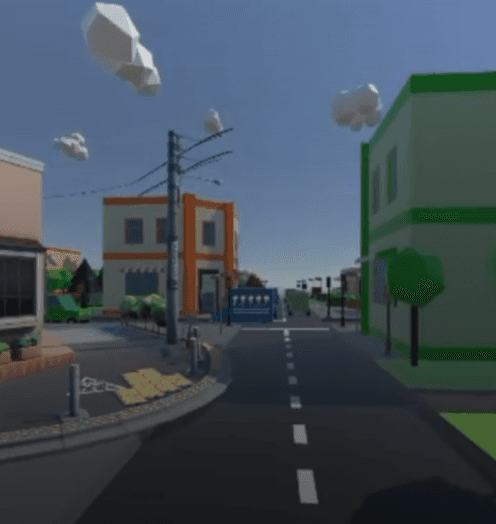
The main challenge in Talkie lies in making language learning engaging, immersive, and intuitive through virtual reality. Traditional language learning methods often lack real-world context and interactivity, leading to reduced engagement and slower progress. By leveraging XR technology, Talkie aims to transform how users practice and acquire new languages by providing a dynamic and realistic conversational environment.
The goal is to create an XR-based platform that enables users to practice languages in real-world scenarios, improving conversational skills, confidence, and comprehension. The focus is on delivering an immersive experience that makes learning enjoyable and effective while removing barriers such as fear of making mistakes or lack of practice opportunities.
Talkie utilizes virtual reality to simulate real-life environments where users can engage in natural conversations with AI-powered characters. By integrating gamified elements and personalized learning paths, the platform ensures a fully immersive and interactive experience, fostering language acquisition in an engaging and practical way. This innovative approach enables users to build confidence and fluency in a supportive, real-world-like setting.
User Persona
Name: Emma Lopez
Age: 27
Occupation: Marketing Specialist
Location: San Francisco, CA
Demographics
Education: Bachelor’s Degree in Communications
Tech Savvy Level: Moderate (frequent app user, enjoys new technologies like VR)
Languages: Native English speaker, beginner in Spanish
Psychographics
Goals:
Improve her conversational Spanish for work and travel.
Gain confidence in speaking with native speakers in real-life situations.
Frustrations:
Feels self-conscious and nervous speaking Spanish with others.
Finds traditional language apps boring and not immersive enough.
Motivations:
Wants to connect better with Spanish-speaking clients at work.
Plans to visit South America and desires to speak fluently during her trip.
Behaviors
Prefers learning tools that are fun, engaging, and offer practical scenarios.
Spends 1-2 hours a week on language apps but often feels unmotivated to continue.
Interested in VR and owns a Meta Quest 2 headset.
Needs & Pain Points
Needs:
Immersive language practice that feels realistic.
Scenarios that replicate real-world conversations.
Feedback and encouragement to build confidence.
Pain Points:
Fear of making mistakes when speaking with native speakers.
Lack of opportunities to practice in a natural, engaging environment.
How Talkie Helps
Talkie provides Emma with an interactive, VR-powered language learning experience where she can practice Spanish in real-life scenarios. Whether it’s ordering food at a virtual café or networking at a simulated business meeting, Talkie allows her to learn by doing. The gamified elements keep her motivated, while the safe, judgment-free environment helps her build confidence in her conversational skills.
The Talkie prototype was developed as part of the XR Bootcamp Foundations and Prototyping program, which meant there was limited time for iterative design processes. The design was primarily based on foundational user-centered principles, focusing on creating an immersive and interactive environment for language learning. Core features, such as realistic conversational scenarios and intuitive navigation, were prioritized to demonstrate the potential of VR in language education. While the prototype served as a proof of concept, it laid the groundwork for future iterations to refine usability and expand functionality.
1. Real-World
Conversational Practice
Users expressed a strong preference for language learning methods that go beyond traditional exercises and focus on real-world application. They emphasized the importance of practicing conversations in realistic scenarios to build confidence and fluency. This insight drove the design of Talkie to simulate environments such as cafés, offices, and public spaces, allowing users to engage in meaningful and practical dialogues.
2. Ease of Navigation
and Accessibility
Feedback from potential users highlighted the need for an intuitive and easy-to-use interface, especially for those who may not be experienced with VR. This informed the decision to keep the design of Talkie simple and user-friendly, with clear visual cues and guidance to help users transition smoothly through the onboarding process and learning activities.
3. Reducing User Anxiety
Many users reported feeling anxious or self-conscious when practicing a new language with others, particularly in live settings. This insight shaped the design to include a safe, judgment-free virtual environment where users can make mistakes without fear. The use of AI-powered characters ensures that users can practice at their own pace while receiving constructive feedback.
References

Duolingo
Focuses on gamified language learning, making the process engaging and fun.
Offers bite-sized lessons and interactive features that keep users motivated.
Rosetta Stone
Known for its immersive approach, focusing on contextual learning and practical vocabulary usage.
Includes features like speech recognition to improve pronunciation.


HelloTalk
Enables language learners to practice with native speakers through text, voice, and video chats.
Encourages real-world conversational practice in a judgment-free environment.