Work Collection
Sip Spot Case Study
Overview
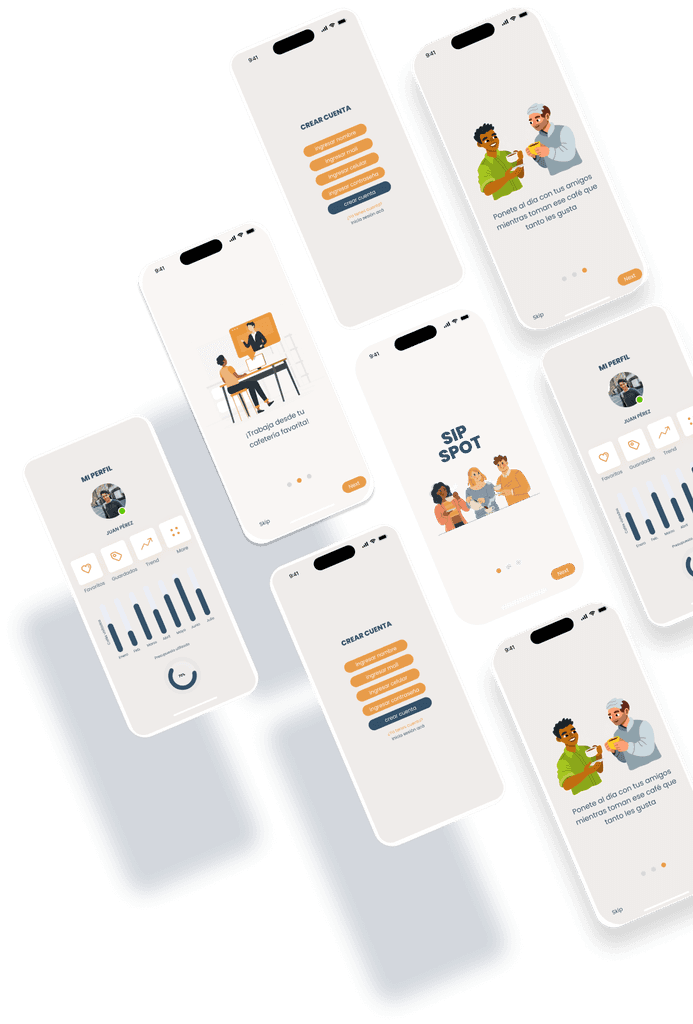
Sip Spot aims to simplify the search for coffee spots by providing users with an intuitive platform to discover and share their favorite places for a unique coffee experience. The app seeks to create a community centered around the love of coffee, connecting users with authentic locations and offering personalized recommendations.
Objective
Finding the perfect spot to enjoy a great cup of coffee can be challenging amid the overwhelming number of options available. Coffee enthusiasts often want to discover new places with inviting atmospheres, a wide variety of coffee options, and sometimes quiet spaces to work or socialize. The problem lies in the difficulty of identifying these "sip spots" that align with each user's unique preferences and needs, leaving many overwhelmed by choice or dissatisfied with their experience.
Solution
Sip Spot is an app that uses the user’s location to display a real-time list of nearby coffee shops, complete with detailed information about their coffee offerings, reviews, and ratings from other users. Additionally, the app allows users to make reservations. It includes loyalty features to reward frequent users and exclusive promotions to encourage exploration of new sip spots. With Sip Spot, users can enjoy a seamless coffee experience, knowing they will always find quality options tailored to their preferences and surroundings.
Design process

1. Empathize
User Interviews
User Research
Competitive Analysis
2. Define
Persona
Empathy Map
Journey Map
3. Ideate
User Flow
Card Sorting
Information Architecture
4. Design
Wireframe
Visual Design
5. Test
Usability Testing
1. Empathize
Qualitative Research
Qualitative research is a scientific method of observation used to collect non-numerical data. This approach includes techniques such as interviews, surveys, focus groups, and participant observation. The goal is to understand user behaviors, opinions, and experiences in depth.
Key Insights
Personalized experience.
Detailed information.
Current challenges in the search.
Innovative features.
Intuitive design.
Feedback from other users.
Quantitative Research
Quantitative research is a data collection strategy that focuses on quantifying the information gathered and analyzing it through statistical methods. This approach helps provide measurable insights and complements qualitative findings.
Questions
Do you frequently visit coffee shops you discover through apps?
Would you like to receive recommendations based on your preferences?
Have you had negative experiences trying to find a coffee shop that suits your preferences?
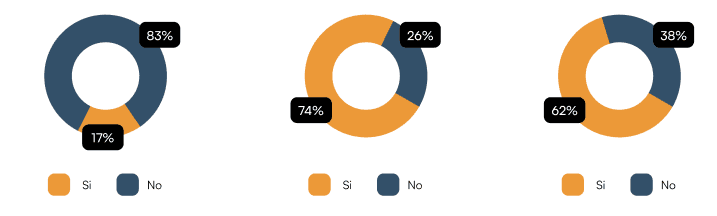
Key Insights Derived from the Survey
74% of respondents want to receive recommendations tailored to their preferences.
Including details such as the menu, user-shared experiences, the possibility to work or study at the location, and knowing the prices is essential to motivate app usage.
54% of respondents are interested in the ability to make reservations.
8 out of 14 respondents mentioned that a rewards system would increase their visits to coffee shops.
Personalization stands out as a key factor. Most users (10 out of 14) expressed that receiving recommendations tailored to their preferences would be a significant incentive to use the app regularly. Beyond location, users want detailed information about menus, user experiences, the possibility to work or study at the venue, and pricing details.
Innovation through features such as the ability to make reservations and a rewards system was also highlighted. Simplicity and intuitiveness in the app's design are crucial, as 84% of respondents emphasized their desire for the app to be easy to use. This data underscores the importance of creating a user-centric experience that balances functionality with ease of use.
Competitive Analysis
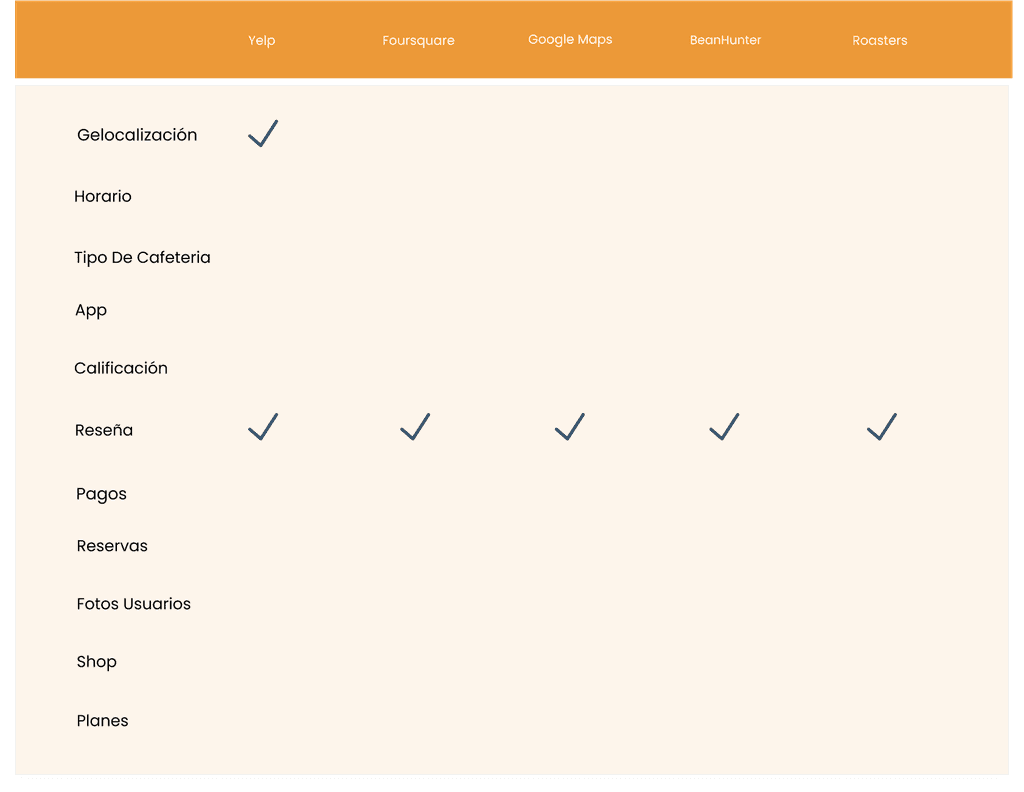
Address any negative aspects that led 33% of users to rate their experience as poor.
Leverage the high preference for online ticket purchases by refining this feature to make it a standout aspect of the app.
Improve the app’s user experience to convert the 40% of users who found it less comfortable.
Define
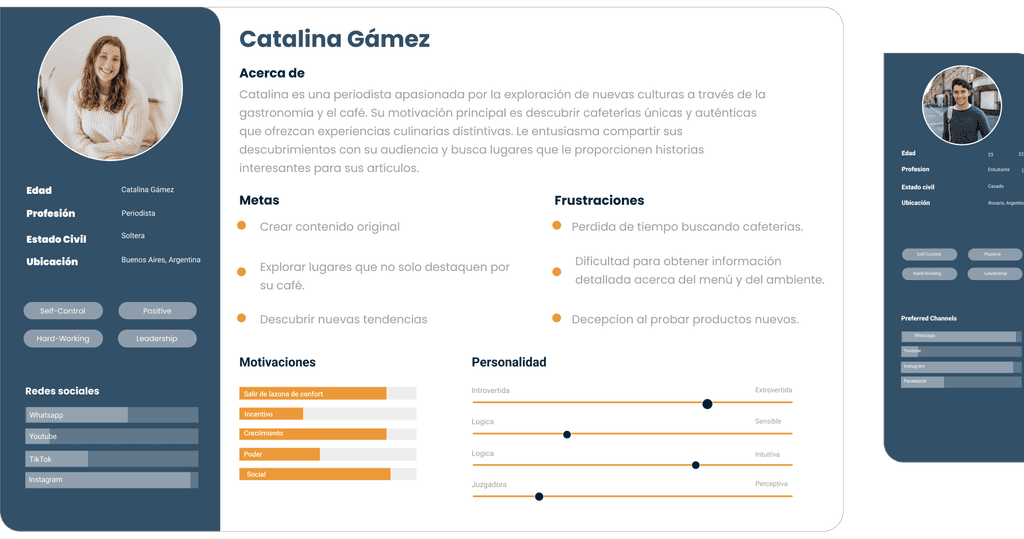
Catalina Gámez is a journalist passionate about exploring new cultures through gastronomy and coffee. Her primary motivation is discovering unique and authentic coffee shops that offer distinctive culinary experiences. She loves sharing her discoveries with her audience and seeks places that provide interesting stories for her articles. Catalina's goals include creating original content, exploring coffee spots that stand out for more than just their coffee, and uncovering new trends. However, she faces frustrations such as wasting time searching for coffee shops, difficulty accessing detailed information about menus and ambiance, and disappointment when trying new products. Motivated by stepping out of her comfort zone, incentives, growth, power, and social connections, Catalina demonstrates qualities like self-control, positivity, hard work, and leadership. She is active on social media platforms like Instagram, TikTok, YouTube, and WhatsApp, making her an engaged and proactive user who values intuitive solutions for her needs.
Empathy Map
1. What does Catalina say?
"I love discovering unique coffee shops that offer more than just coffee; I want a full experience."
"It’s frustrating when I can’t find detailed information about a place, like their menu or ambiance."
"I want to inspire my audience with new and original content."
2. What does Catalina think?
"I need coffee shops that fit my style and have a great story to tell."
"Finding the perfect spot takes too much time and effort."
"I want reliable recommendations that align with my preferences."
3. What does Catalina feel?
Positive feelings: Excitement about discovering new places, satisfaction when finding an ideal spot.
Negative feelings: Frustration over wasting time, disappointment with poor experiences, and stress from unreliable recommendations.
4. What does Catalina do?
Actively searches for new coffee shops through apps and social media.
Shares her experiences and insights with her audience, aiming to create original content.
Prioritizes spots with distinct ambiance and quality offerings for her articles.
Ideate
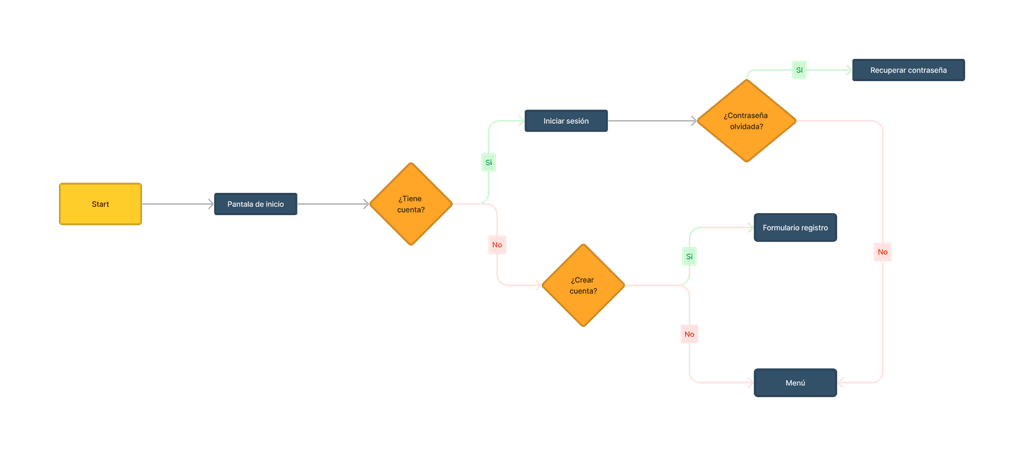
Task flow: Register
Card Sorting
A follow-up test was conducted with 14 users, involving a card-sorting exercise to understand their thought processes and preferences regarding how the app's sections should be organized. This activity provided valuable insights into how users naturally categorize information, helping to design an intuitive navigation structure and improve the overall user experience. By analyzing the results, we were able to identify patterns in user expectations, ensuring the app's information architecture aligns with their mental models and enhances usability.
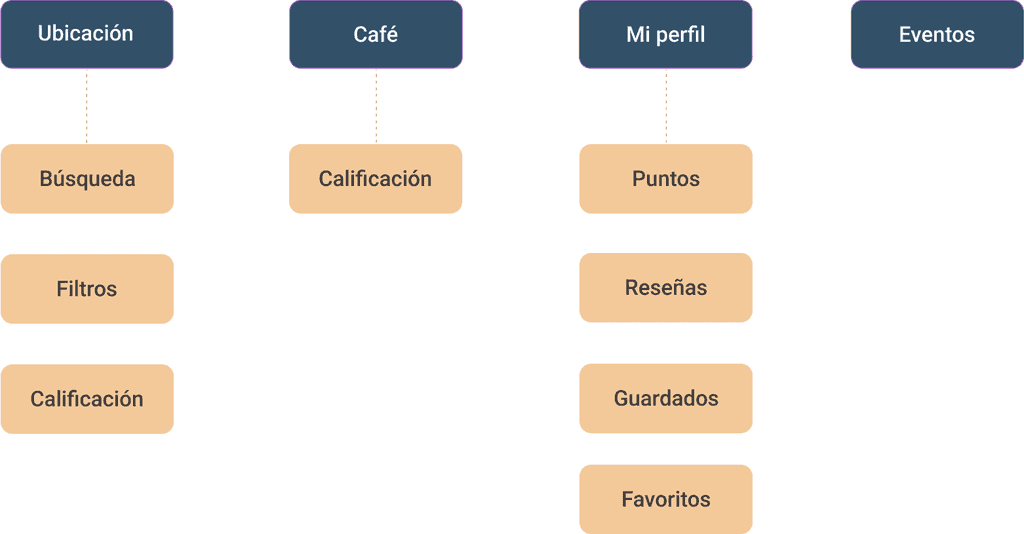
Information Architecture for the app
The Information Architecture (IA) of the app was designed based on insights gathered through user research, card-sorting exercises, and usability testing. The goal is to create a structure that is intuitive, user-friendly, and aligned with users' mental models. Below is the proposed IA:
1. Home
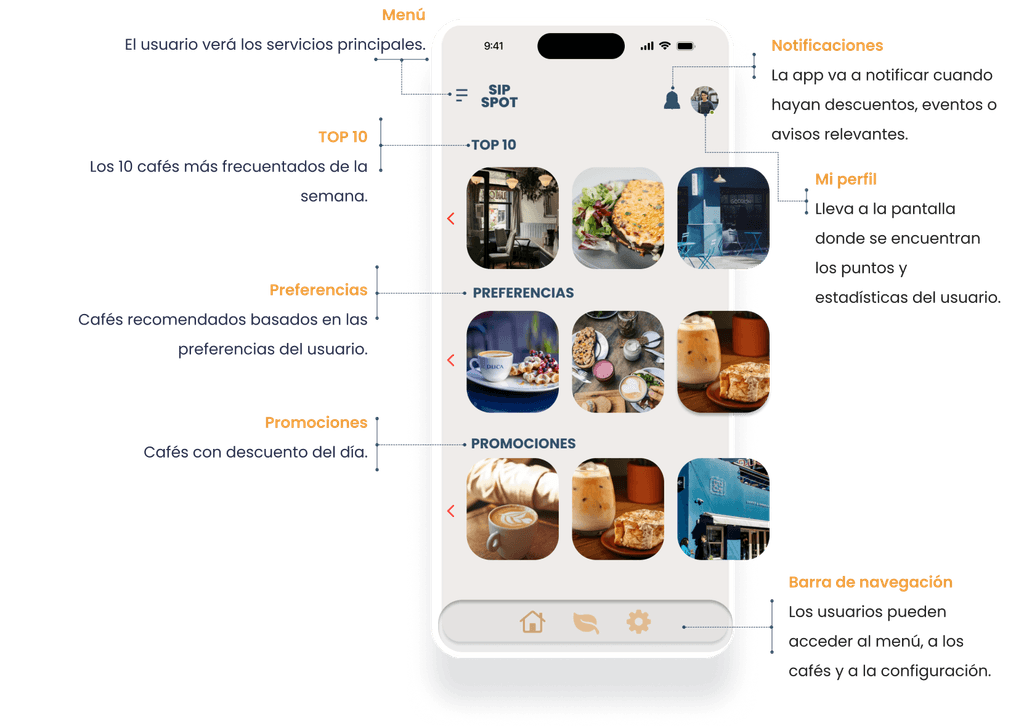
Personalized recommendations (based on user preferences and location).
Featured coffee shops (popular or trending spots).
Quick links to common actions (e.g., explore nearby, make a reservation).
2. Explore
Filters for:
Location.
Coffee types or specialties.
Amenities (e.g., work-friendly, pet-friendly).
Pricing.
Categories:
“Hidden Gems.”
“Top-Rated Spots.”
“Newly Opened Cafes.”
3. Favorites
Saved coffee shops.
Ability to organize favorites into folders (e.g., “For Work,” “Weekend Brunch”).
4. Rewards
Progress tracker for rewards.
User loyalty program:
Points earned for visits or purchases.
Exclusive offers or discounts.
5. Profile
User preferences (e.g., favorite coffee types, preferred ambiance).
Past activity (visited coffee shops, reviews submitted).
Account settings (notifications, payment methods, etc.).
6. Reviews & Community
User reviews for coffee shops.
Shared user experiences (e.g., photos, stories).
Option to follow other users with similar tastes.
7. Reservations
View and manage reservations.
Available time slots for coffee shops with booking options.
8. Notifications
Alerts for new recommendations.
Updates on promotions or events at coffee shops.
Reminders for upcoming reservations.
How the Architecture was Designed
User-Centric Approach: Based on the card-sorting exercise, users prioritized sections like "Explore" and "Favorites," highlighting the importance of ease of discovery and personalization.
Hierarchy: Clear and minimal navigation structure to prevent cognitive overload.
Consistency: Similar design patterns across all sections for a seamless experience.
Scalability: Flexible enough to add features in the future without disrupting the flow.
Design
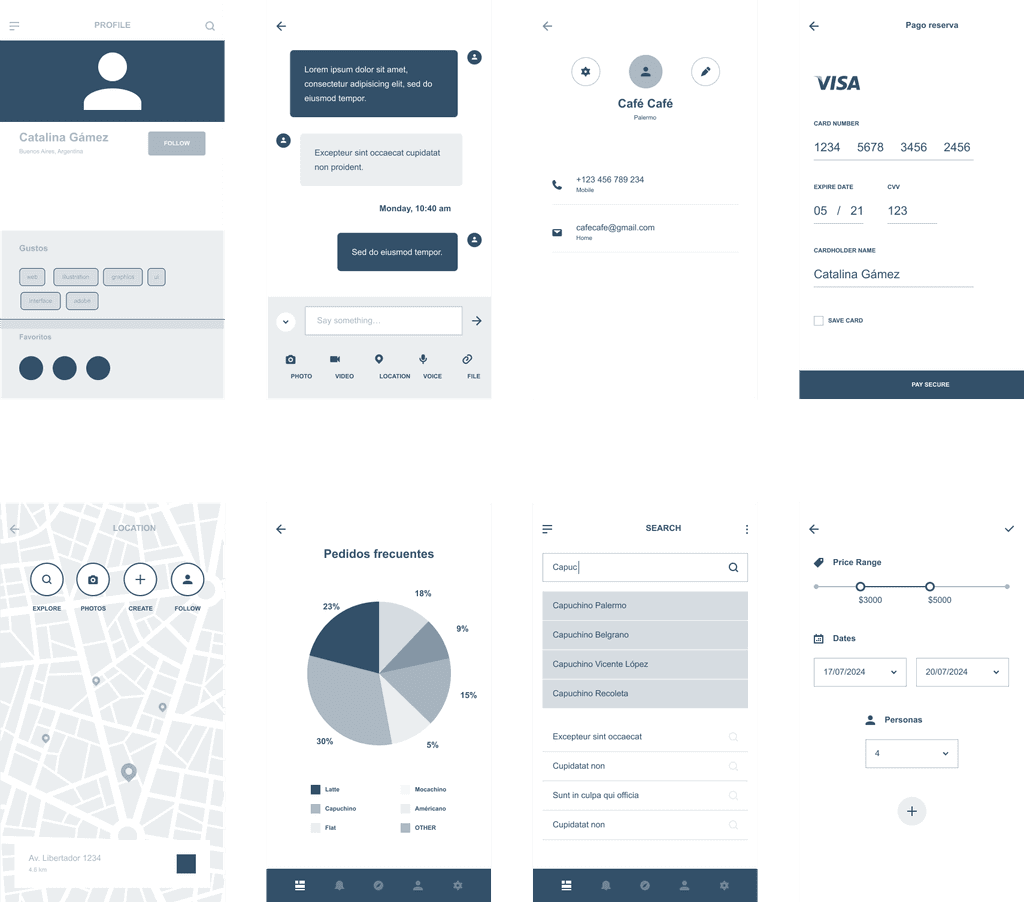
Low Fidelity Wireframes

High Fidelity Wireframes
Design System
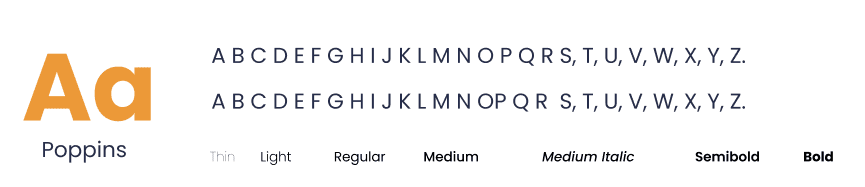
Typography
Color Palette

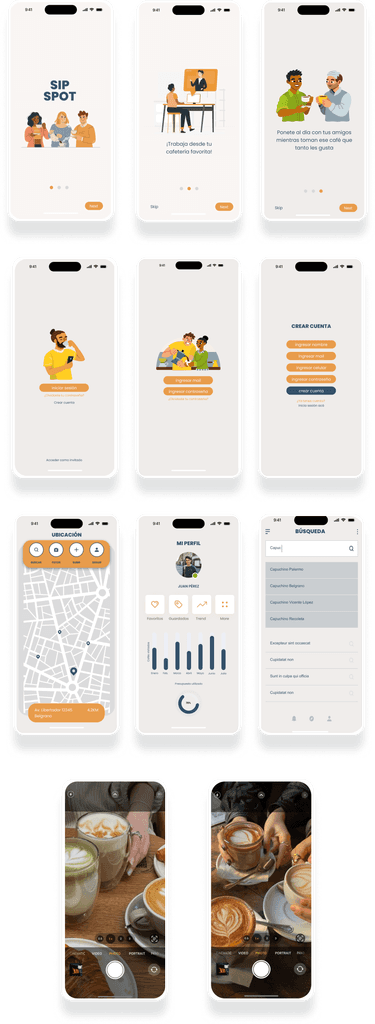
Visual Design
Test
Usability
A usability test was conducted with various users to observe how they completed a specific task. In the event of an error, could they resolve it?
The objective was to identify areas of the application that required changes to improve performance and user satisfaction. Using the feedback provided, revisions were made to better understand user comprehension and experiences.
The tests revealed that most users successfully completed the tasks, demonstrating an intuitive interface. However, points of confusion were identified in certain areas of the application, which created difficulties for some participants when resolving errors. The revisions implemented based on the feedback helped improve the user experience in these problematic areas. Nevertheless, the importance of continuous testing and adjustments is emphasized to optimize usability and ensure a fluid and satisfying experience for all users.
Recommendations to Improve the Experience
Implement a virtual assistant that learns user preferences over time and offers personalized coffee shop recommendations.
Enhance the app's accessibility.
Use augmented reality to preview the coffee shop before visiting.
Integrate order placement directly through the app.
Add an online shopping integration.
Include event and activity invitations.
Improve detailed information about coffee shops, such as the origin of the coffee, barista profiles, and additional food options.
Provide contextual notifications alerting users about special offers, nearby events, or new coffee shops that might interest them based on their history.